|
COVER STORY
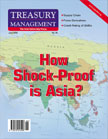
How Shock-Proof is Asia?
-- Swaha Shome
Since mid 2007, Asian economies were believed to have been decoupled from the US economy and one hoped that the US recession would not dampen the growth story of emerging Asia. As the forecasts of recession have become a reality, one is not sure about the extent of its impact on Asia. Can Asia survive despite the recession in the US? It is more likely that Asia will feel the heat of the US meltdown, but it may not be as severe as the one in the aftermath of 2001 US recession, as Asia was then completely dependent on the global superpower. The reasons why Asia is stronger today but not immune to the crisis in the US have been discussed in the article.
© 2008 IUP . All Rights Reserved
TREASURY
Supply Chain Finance : An Overview
-- K V Saraswathi
With the increase in the number of buyers and suppliers participating in international trade, there is a corresponding need for risk mitigation techniques on a global scale as well as the right financial partnerships. This article examines these issues and offers various strategies and solutions to resolve them.
© 2008 IUP . All Rights Reserved
FOREX
Yen Carry Trade : Is it a Losing Bet?
-- T Kiran Kumar
The notorious Yen Carry Trade (YCT) has been cheering up the investors en masse till date. However, the aggravating misery on Wall Street, US recession woes and the recent dollar tumble could spell trouble for YCT. This article discusses the issue.
© 2008 IUP . All Rights Reserved
FOREX
Forex Derivative Losses in India
-- Krishna Prasanna
Financial markets are generally impulsive. Influenced by global events, forex markets have become highly volatile and unpredictable. Adverse movement of exchange rates is resulting in significant losses for the derivative traders. The Indian corporate treasuries have to evolve sound risk management policies and practices. The Indian companies need to build the ability to manage the new financial risks that may arise in the process of global integration.
© 2008 IUP . All Rights Reserved
FOREX
Managing International Finance : A Strategic Corporate Issue in Knitwear Exports
-- S Vasumathy Hariharan
It is an accepted fact that rupee appreciation has adversely affected the exporting units, especially textiles. But it is also widely disputed that this phenomenon brings prospects too. Are the exporting units debating still on these issues? Or are they affected by any other related issues? This survey-based article focuses on the issues that confront the knitwear exporting units functioning in Tirupur, the hosiery hub of Tamil Nadu. It was interesting to learn how the units had sustained the impact and also handled some of the major concerns.
© 2008 IUP . All Rights Reserved
RISK
Credit Rating of Small and Medium Enterprises in India
-- Preethi Rao
Small and Medium Enterprises (SMEs) play a key role in a country's economy. They are like its blood vessels. Though the policy-makers have realized the importance of SMEs, they have hitherto done little to address the SMEs' real concerns. Lack of timely and adequate finance has been counted by such enterprises as the biggest bottleneck. The reasons for low SME credit penetration include insufficient credit information, low market credibility, etc. This necessitates an awareness campaign on credit availability and also a comprehensive, transparent and reliable rating of SMEs.
© 2008 IUP . All Rights Reserved
RISK
Commodity Derivatives and Inflation
-- Sharon K Jose
The recent vast increase in commodity derivatives, and the resulting commodity boom, is a largely rational response to the vast increase in inflation. The article briefly addresses the issue.
© 2008 IUP . All Rights Reserved
SPEECH
Sovereign Wealth Funds and Global Imbalances Sir John Gieve
© 2008 Speech by Sir John Gieve, Deputy Governor of the Bank of England, to the Sovereign Wealth Management Conference, London, March 14, 2008.
CASE STUDY
A Move Towards 2009 : HDFC-CBOP Merger
-- Manju Gupta and Mona Kawatra
The merger of HDFC Bank-CBOP is expected to be a win-win for both the banks in terms of both asset size and footprint, as the market is getting competitive day by the day with the expected entry of foreign banks into India. The merger will perhaps add value, scale, geography, and experienced staff to the HDFC Bank's franchise units.
© 2008 IUP . All Rights Reserved
SHORT BOOK REVIEWS
Financial Market Innovations - Emerging Trends and The Profitability of Trading Rules and Volatility in Emerging Financial Markets
-- Radha Purswani and Imad Moosa A
Innovations in financial markets have played a crucial role in shaping the economic landscape of the leading, as well as, emerging economies of the world. In the past few decades, financial services have witnessed many successful innovations leading to better integration and greater maturity of world financial markets.
© 2008 IUP . All Rights Reserved
|